Is Anxiety A Persistent Presence In Your Life?
Constant noise of racing thoughts
Do you live with the constant noise of racing thoughts, a rapid heart rate, and an impending sense of doom that something’s wrong?
Have these symptoms made it difficult for you to sleep, focus, relax, or stay present?
Are you beginning to avoid situations that may trigger your symptoms, or do you experience “panic about the panic”—already dreading the next time you’ll encounter these sensations?
For many people, anxiety is causing them to live in a constant state of what if..?
They’re anticipating a situation that they believe will trigger anxiety, creating an exhausting mental process of imagining every outcome and playing out worst-case scenarios of what might happen. Not only does living this way result in mental and emotional disruptions—it also tends to impact work performance and relationships. Anxiety can generate physical symptoms too, like muscle tension, digestive issues, and symptoms of panic.
Do You Experience Panic Attacks, Too?
If your anxiety is accompanied by acute physical symptoms—including a racing heartbeat, shortness of breath, hypervigilance, or intense feelings of fear—you may also suffer from panic attacks.
When these patterns are present, they can take center stage in a way that takes joy out of just about every aspect of life. And because you spend so much of your energy anticipating the next “bad” thing, it may feel like you don’t have time for anything or anyone else.
Anxiety & OCD Therapy of Maryland specializes in the treatment of these very symptoms. Through the counseling process, you can develop skills for understanding, coping with, and responding differently to your anxiety.
Anxiety Disorders Are Common And There Are Different Types
Anxiety is one of the most common challenges people struggle with worldwide, with one in four adults experiencing an anxiety disorder at some point.
At its core, anxiety is an evolutionary mechanism that has been essential to our survival for thousands of years, as “fight or flight” responses are used to detect threats. Unfortunately, however, this means the modern brain has been conditioned to perceive danger at times when there may not actually be any—and this is not your fault.
Symptoms can develop into specific subsets of anxiety disorders, which may include:
- Generalized Anxiety Disorder (chronic feelings of being fearful, worried, or overwhelmed)
- Social Anxiety Disorder (an intense, persistent worry surrounding social situations and the fear of being judged)
- Health Anxiety (a preoccupation with health and physical symptoms)
- Panic Disorder (repeated instances of a sudden onset of anxiety-related physical symptoms—or panic attacks—that include dizziness, heart palpitations, shortness of breath, and abdominal distress)
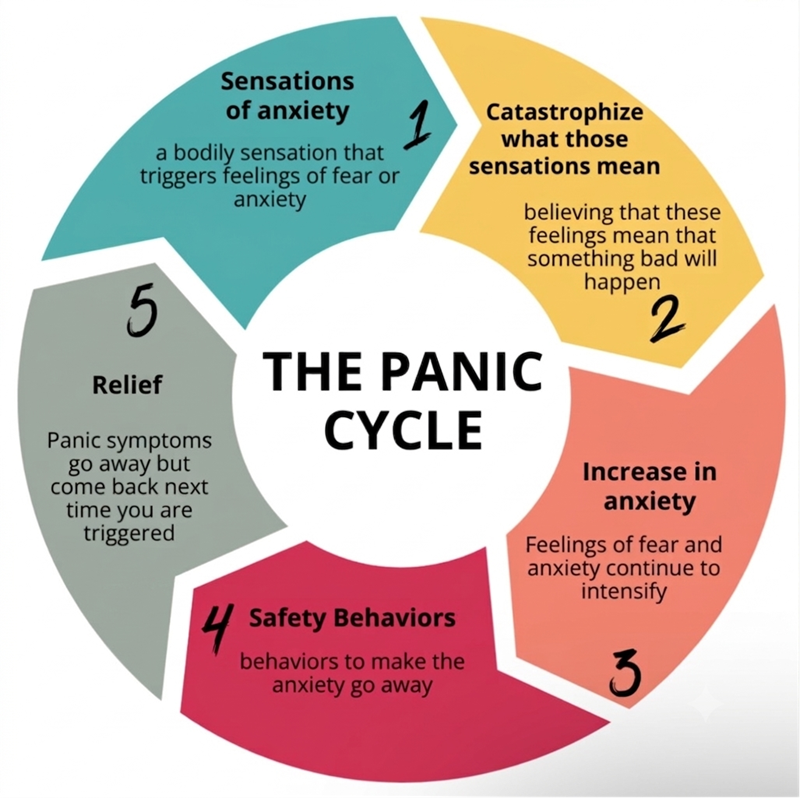
Avoidance Only Makes The Cycle Of Anxiety Worse
On the surface, it can seem like avoidance is the solution to these problems. Yet, avoidance is often what makes symptoms worse in the long run, feeding the cycle of anxiety. A therapist helps you understand your experiences of anxiety, allowing you to process emotions, manage triggers, and cope with the unknown.
My Approach
Once I have a sense of your symptoms, I can begin to individualize counseling by incorporating the evidence-based therapy approaches that are proven to treat anxiety disorders. The behavioral approaches I use are designed to slow the thought process, expand the ability to tolerate distress, and create new ways of engaging with your anxiety.

- Cognitive Behavioral Therapy (CBT) helps encourage more flexible thinking patterns by restructuring how you think, feel, and behave in response to stressful emotions.
- Acceptance and Commitment Therapy (ACT) fosters self-compassion by taking a more values-based approach to navigating life challenges and stressors.
- Exposure Therapy gently and safely exposes you to some of your fears in the controlled space of therapy so you can feel more control over your reactions
- Mindfulness and relaxation techniques target physical symptoms of anxiety, allowing you to develop skills that won’t fuel the cycle of anxiety.
Your anxiety is not only normal—it’s a valid emotion in life circumstances that cause worry, uncertainty, and overwhelm. While your anxiety has a function, you can learn to manage it in a way that doesn’t lead you to spiral. With the time and energy you free up through anxiety treatment, you can begin to pursue the aspects of life that felt previously out of your reach.
Frequently Asked Questions About Anxiety Therapy
Do you have a question?
Fill out the form on the Contact page and you will receive an email response from Natalie within one business day.
Will I have to be in therapy for a long time in order to see reduction in my anxiety symptoms?
From the very first counseling session, my goal is to teach you anxiety management skills that you’ll be
able to use in your everyday life, even when a therapist isn’t present. I do this by using proven, structured,
skills-based therapies that will allow you to feel more confident in your coping strategies as time goes on.
I want to help you find relief as soon as possible. And while I maintain a flexible “open door” scheduling
policy even once clients are done with treatment, my objective is never to keep you in therapy for longer
than you need to be.
Won’t talking about my anxiety with a therapist just make my symptoms worse?
The most effective therapies used in treatment for anxiety disorders and panic attacks are not about talking endlessly in circles or analyzing each issue under a microscope. My counseling approach is focused more on the immediate solutions and skills that will help you to stop the anxiety cycle before it even starts.
You will learn practical, concrete skills through this process that allow you to regulate stress and emotions even when you feel activated or overwhelmed.
Will I be expected to go on medication as a part of my treatment?
Your decision to use or not use medication is a personal choice, and I respect that choice entirely. Medication is not a requirement of therapy, and in fact, you would need to work with a psychiatrist in order to get a prescription since I am not licensed to prescribe.
Many of my clients find lasting relief through therapy alone. However, if you are interested in working with a prescribing clinician, I would be happy to get you a referral and coordinate with them about your course of anxiety treatment.
You Can Change Your Response To Anxiety
Anxiety & OCD Therapy of Maryland uses Cognitive Behavioral Therapy (CBT), Exposure Therapy,
mindfulness, and other approaches to help clients overcome symptoms of anxiety disorders and panic
attacks. To find out more about how I can help, get in touch by submitting a message through the contact
page and you will hear from me within one business day